Description
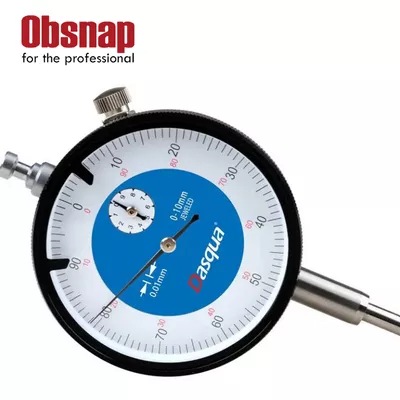
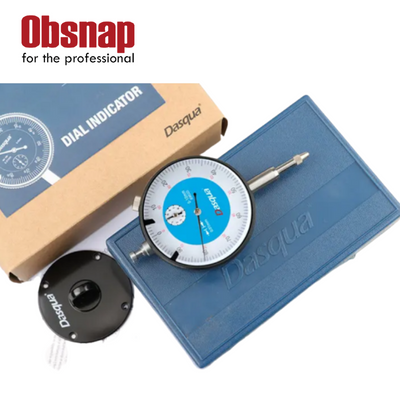
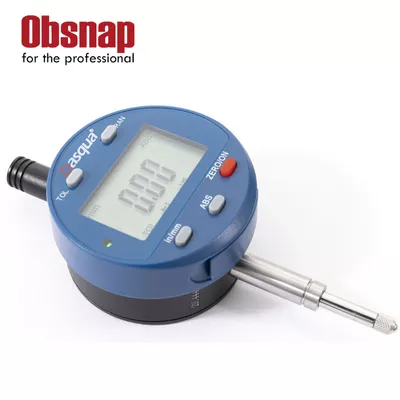
The DASQUA Dial Indicator is designed to measure small linear displacements and object dimensions with high precision. It features jeweled bearings that reduce friction, providing smoother movement of the needle and more accurate readings. The instrument is manufactured in strict compliance with DIN878 standards for reliability and consistency.
This dial indicator is widely used in industrial, workshop, and laboratory environments for checking workpiece tolerances, alignment, or small deviations. With options for flat back or lug back styles, it is compatible with various setups and mounting methods. Optional features include balanced or continuous dials, waterproofing, and reverse reading, making it versatile for multiple measurement scenarios.
Specifications
| Code |
Range |
Graduation |
Style |
A |
B |
C |
D |
E |
Accuracy |
Hysteresis |
| 5111-1105 |
0-10 |
0.01 |
Flat Back |
8 |
φ 58 |
φ 8 |
18.5 |
φ 55 |
0.017 |
0.003 |
| 5111-1205 |
0-10 |
0.01 |
Lug Back |
8 |
φ 58 |
φ 8 |
18.5 |
φ 55 |
0.017 |
0.003 |
Product Name: Dial Indicator
Item Number: 5111-1105
Measuring Range: 0~10 mm / 0~2’’
Graduation: ± 0.01 mm / 0.0005’’
Accuracy: 0.017 mm / 0.0005’’
Application
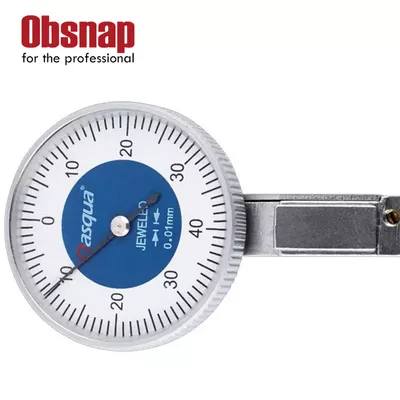
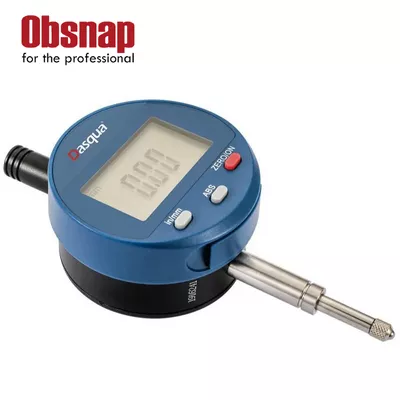
Dial gauges, dial callipers, and probe indicators are other names for dial indicators. Small linear distances and object sizes can be precisely measured using these precision measuring equipment. The dial enlarges the measurement to make it easier for the human eye to read. Dial indicators are employed frequently in production, labs, and other industrial or mechanical domains anytime a small measurement must be located, recorded, or conveyed, such as when examining the variation in tolerance of a workpiece. The displacement along the indicator’s axis is measured by common dial indicators. Dial test indicators resemble dial indicators very closely; however, they have a measurement axis perpendicular to their axes. Dial and dial test indicators come in both analogue (mechanical dial) and electronic (digital display) varieties. Some electronic models electronically transport the data to a computer for storage and possible manipulation.