Phone

+603-5621 5786

Business Hour

08:30 - 17:30

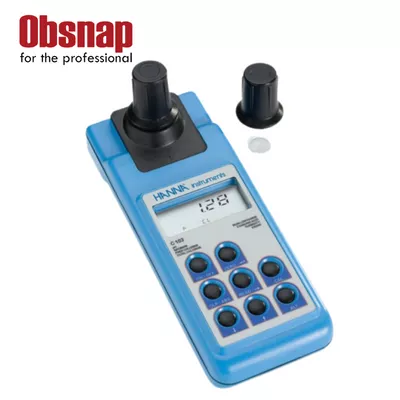
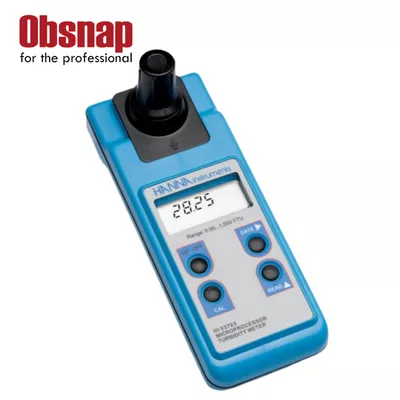
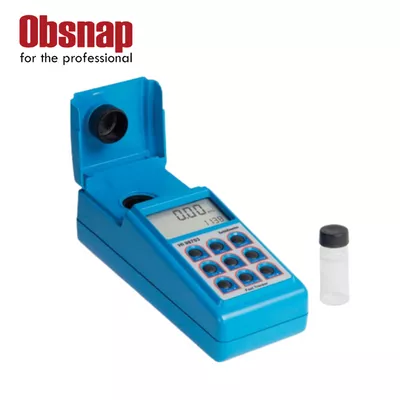
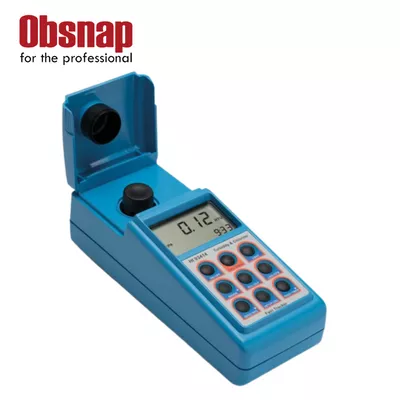
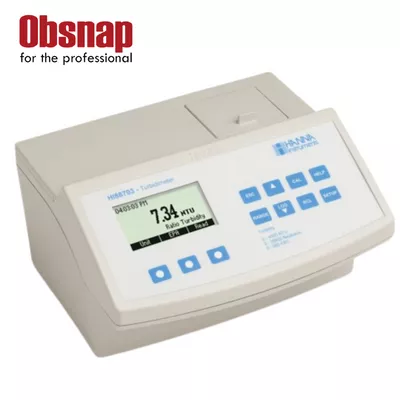
Hanna Instruments HI88703-02 EPA Compliant Benchtop Turbidity Meter

The HI88703 is a benchtop turbidity meter with good accuracy (2% of reading plus 0.02 NTU). AMCO-AEPA-1 primary turbidity standards are included with the meter and are used for performance testing and calibration.

The EPA Method 180.1 and Standard Methods for the Examination of Water and Wastewater 2130 B specifications for turbidity measurements are met and exceeded by the HI88703.

  • Up to ±0.02 NTU accuracy
  • Ratio and non-ratio turbidity modes
  • USB for data transfer

Description

With its distinctive design for measuring water quality, the HI88703 Precision Turbidity Benchtop Meter offers trustworthy and accurate readings, particularly in the low turbidity range.

The instrument’s optical system is state-of-the-art, ensuring accuracy, long-term stability, and reducing stray light and color interferences. Any changes in the tungsten lamp’s intensity are offset by routine calibration using the provided standards. The repeatability of turbidity measurements is ensured by the 25 mm round cuvettes made of superior optical glass.

Features at-a-glance:

Two Measurement Modes – The HI88703 features two options for turbidity measurement: ratio and non-ratio mode. Turbidity measurements can be made in the 0.00 to 4000 NTU (Nephelometric Turbidity Units) when using the ratio mode and in the 0.00 to 40.0 NTU range when non-ratio mode is used.

Multiple Turbidity Units of Measure – Turbidity can be read as Nephelometric Turbidity Units (NTU), European Brewing Convention units (EBC), or Nephelos units.

EPA Compliant –  The HI88703 meets and exceeds the requirements of EPA and Standard Methods for turbidity measurements. When the meter is in EPA mode all turbidity readings are rounded accordingly to meet reporting requirements.

Calibration – The HI88703 has a powerful calibration function that compensates for lamp aging or changing. The calibration can be done using the supplied calibration solutions or user-prepared standards. A two, three, four, or five-point turbidity calibration can be performed by using the supplied (<0.10, 15.0, 100, 750, and 2000 NTU) standards. Calibration points can be modified if user-prepared standards are used.

AMCO AEPA-1 Primary Turbidity Standard – The AMCO AEPA-1 supplied standards are recognized as a primary standard by the USEPA. These non-toxic standards are made of styrene divinylbenzene polymer spheres that are uniform in size and density. The standards are reusable and stable with a long shelf life.

GLP Data – The HI88703 features complete GLP (Good Laboratory Practice) functions that allow traceability of the calibration conditions. Data includes calibration points, date, and time.

Data Logging – Up to 200 measurements can be stored in the internal memory and recalled at any time.

Data Transfer – For further storage or analysis options, logged data can be downloaded to a Windows compatible PC using the USB port and the HI92000 software.

Tutorial Mode –  The unique tutorial mode provides additional information to help the user during measurements. When enabled, the instrument displays explanations and a confirmation button when a preparation or other operation has to be performed.

Contextual Help – Contextual help is always available through a dedicated HELP button. Clear tutorial messages and directions are available on-screen to quickly and easily guide users through setup and calibration.  The help information displayed is relative to the setting/option being viewed.

Backlit Graphic LCD Display – A graphic LCD display provides an easy to understand, user-friendly interface. All messages are in plain text making them easy to read.

One of the most crucial factors used to assess the quality of drinking water is turbidity. There is significant evidence that reducing turbidity is an effective defense against infections, despite it once being thought of as a mostly aesthetic property of drinking water. Turbidity measurements are made in natural water to assess the water’s general quality and suitability for uses involving aquatic creatures. Turbidity management used to be the only factor considered in the monitoring and treatment of wastewater. To confirm that the values meet legal standards, turbidity monitoring is currently required at the end of the wastewater treatment process.
Water turbidity is an optical characteristic that prevents light from being transferred and instead scatters and absorbs it. The suspended solids in a liquid play a major role in scattering light as it moves through it. The amount of light scattered increases with turbidity. Since there will always be some turbidity in a solution, even a perfectly pure liquid will occasionally scatter light.
The EPA mandates the monitoring and reporting of turbidity at drinking water treatment facilities that use surface water as a source of water. Lakes and rivers are sources of surface water. Nephelometer requirements for reporting measurements in accordance with EPA Method 180.1 are as follows:
  • The applicable range is 0-40 nephelometric turbidity units (NTU)
  • Light source:  Tungsten lamp operated at a color temperature between 2200-3000°K.
  • Distance traversed by incident light and scattered light within the sample tube: Total not to exceed 10 cm.
  • Detector: Centered at 90° to the incident light path and not to exceed ±30° from 90°. The detector, and filter system if used, shall have a spectral peak response between 400 nm and 600 nm
  • The sensitivity of the instrument should permit detection of a turbidity difference of 0.02 NTU or less in waters having turbidities less than 1 unit.
  • Report results as follows:
NTU reading Rounded to nearest
0.0 – 1.0 0.05
1 – 10 0.1
10 – 40 1
40 – 100 5
100 – 400 10
400 – 1000 50
>1000 100

The HI88703 meets and exceeds the meter criteria speci˜ed by the EPA Method 180.1 and Standard Methods for the Examination of Water and Wastewater 2130 B.

Principal of Operation

The sample scatters the light beam that passes through it in all directions. Numerous factors, including the wavelength of the incident light, the size and shape of the particles, the refractive index, and the color, influence the intensity and pattern of the scattered light. A tungsten filament lamp, a scattered light detector (90 degrees), and a transmitted light detector (180 degrees) are all parts of the HI88703’s optical system.
Using an efficient algorithm that corrects and accounts for color interferences, the instrument’s microprocessor determines the NTU value from the signals that reach the two detectors in the ratio turbidimeter range. The optical system and measuring method also account for variations in lamp intensity, reducing the frequency of calibration requirements.
The signal on the scattered light detector (90°) is used to determine the NTU value in the non-ratio turbidimeter range. This approach has a good linearity in the low range but is more susceptible to variations in light intensity. The stray light that is detected by the sensors but is not brought on by light scattering from suspended particles determines the lower detection limit of a turbidimeter. For low turbidity samples, the HI88703’s optical system is made to have very little stray light, producing extremely accurate readings.
Measurements must be traceable to primary reference materials, which is ensured by the HI88703-11 AMCO AEPA-1 standards. The turbidity meter is calibrated using these standards, and its performance is checked.

Supplied with Certificate of Analysis

  • Lot number
  • Expiration date
  • Standard value @ 25 °C
  • Reference meter NIST traceable

Provided storage containers

  • Light tight
  • Protects from accidental breakage
More Information
SKU HI88703-02
Product Name EPA Compliant Benchtop Turbidity Meter – HI88703
Quote Required Yes
Turbidity Range Non-Ratio mode
Turbidity Resolution Non-Ratio mode
Turbidity Accuracy ±2% of reading plus 0.02 NTU (0.15 Nephelos; 0.01 EBC); ±5% of reading above 1000 NTU (6700 Nephelos; 245 EBC).
Turbidity Repeatability ±1% of reading or 0.02 NTU (0.15 Nephelos; 0.01 EBC) whichever is greater
Turbidity Stray Light < 0.02 NTU (0.15 Nephelos; 0.01 EBC)
Turbidity Calibration two, three, four, or five-point calibration
Turbidity Measuring Method nephelometric method (90°) or ratio nephelometric method (90° & 180°), adaptation of the USEPA Method 180.1 and Standard Method 2130 B
Turbidity Measuring Modes normal, average, continuous
Turbidity Light Source tungsten filament lamp
Turbidity Light Detector silicon photocell
Logging Memory 200 records
Connectivity USB
Display 40 x 70 mm graphic LCD (64 x 128 pixels) with backlight
Power Supply 115/130 VAC; 50/60 Hz
Environment 0 to 50°C (32 to 122°F), RH max 95% non-condensing
Dimensions 230 x 200 x 145 mm (9.0 x 7.9 x 5.7”)
Weight 2.5 kg (88 oz.)
Ordering Information HI88703 is supplied with sample cuvettes (5) with caps, HI88703-11 calibration cuvettes for turbidity, silicone oil, cuvette wiping cloth, power cord, and instruction manual.

Ready to Transform Your Business? Contact Us Today

Categories

Request a Quote or Further Information

Please fill in the request form below and one of our engineers will contact you to discuss your system requirements and if we can help, our typical response time is within 1 – 3 working day.