Phone

+603-5621 5786

Business Hour

08:30 - 17:30

Obsnapmeter- 418 Abrasion Testers – Taber Crockmeter

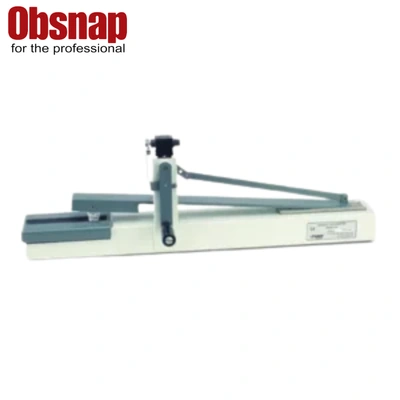
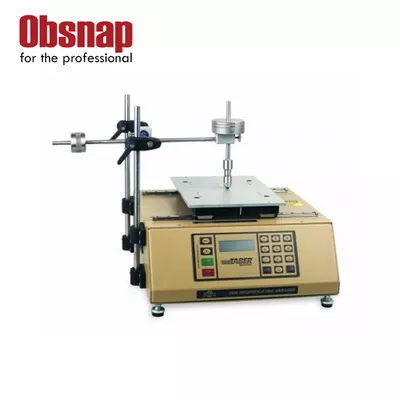
The Taber® Crockmeter 418 is a laboratory instrument used to evaluate color transfer (crocking) and rubbing resistance of textiles and other materials by simulating the rubbing action of a human finger under controlled conditions.

  • Measures Color Transfer (Crocking) Determines how much dye or color rubs off from textiles onto another surface using a standardized cotton cloth (AATCC Method 8).
  • Simulates Real-Life Rubbing Uses a 16 mm acrylic “finger” with a constant 9N load and 100 mm reciprocating motion to mimic human rubbing action.
  • Reliable & Reproducible Results Mechanical counter tracks cycles; constant pressure ensures consistent and accurate testing.
  • Versatile Applications Suitable for textiles, carpets, yarns, leather, printed materials, painted surfaces, and smudge or scuff resistance testing.

Description

The Taber Crockmeter 418 is a precision instrument designed to evaluate color transfer and rubbing resistance of textile materials and other coated surfaces. Commonly used in accordance with internationally recognized standards such as AATCC Method 8, it provides a fast and reliable method for determining the degree of color that transfers from a textile surface onto a standardized crocking cloth during rubbing. The instrument simulates the action of a human finger and forearm using controlled pressure and a consistent reciprocating motion, ensuring repeatable and reproducible test results. It is widely applied to fabrics, carpets, yarns, leather, and can also be used for smudge, smear, scuff, and mar resistance testing on printed images and painted surfaces.

The Crockmeter 418 operates with a 16 mm diameter acrylic “finger” that moves back and forth over a 100 mm stroke length with each turn of the hand crank. A constant 9N load is applied through a weighted arm to maintain uniform pressure throughout the test cycle, while a mechanical counter records the number of completed rubs. Test specimens are securely positioned on the base using a sample holder, with a sandpaper pad placed underneath to prevent shifting during operation. For textile testing, a standardized 100% combed cotton crocking cloth—meeting strict specifications for fiber content, yarn count, weave, pH, mass, and whiteness—is typically used as the abradant, ensuring consistent and standardized evaluation of color fastness to rubbing.
Features

  • Measures Color Transfer (Crocking) Determines how much dye or color rubs off from textiles onto another surface using a standardized cotton cloth (AATCC Method 8).
  • Simulates Real-Life Rubbing Uses a 16 mm acrylic “finger” with a constant 9N load and 100 mm reciprocating motion to mimic human rubbing action.
  • Reliable & Reproducible Results Mechanical counter tracks cycles; constant pressure ensures consistent and accurate testing.
  • Versatile Applications Suitable for textiles, carpets, yarns, leather, printed materials, painted surfaces, and smudge or scuff resistance testing.

Specifications

For textile applications, a standardised crocking cloth is most frequently employed as the abradant. The wire spring clip that holds this square (or occasionally round) cloth in place is wound around the acrylic crock’s “finger.” According to AATCC Method 8, the fabric must adhere to the following requirements:

Fiber 100% 10.3 – 16.8mm combed cotton staple, desized, bleached, with no optical brightener or finishing material present
Yarn 15 tex (40/1 cotton count), 5.09 turns/cm “z
Thread Count 32 +/-3 warp ends/cm: 33 +/-3 picks filling/cm
Weave 1/1 plain
pH 7 +/-0.5
Mass/sq. meter 113 +/-5g greige: 100 +/-3 g finished)
Whiteness W = 80 +/-2

Ready to Transform Your Business? Contact Us Today

Categories

Request a Quote or Further Information

Please fill in the request form below and one of our engineers will contact you to discuss your system requirements and if we can help, our typical response time is within 1 – 3 working day.