Phone

+603-5621 5786

Business Hour

08:30 - 17:30

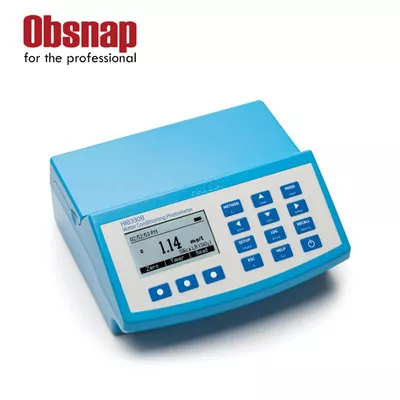
Hanna Instruments Water Conditioning Photometer – HI83308

The HI83308 is a benchtop multi-parameter water conditioning photometer with digital pH input designed for comprehensive water quality analysis. Featuring an advanced 4-LED optical system with reference detector and narrow band filters (±1 nm accuracy), it ensures stable and repeatable results. With 23 programmed methods measuring 15 key parameters, it covers essential testing including iron, ammonia, fluoride, chlorine, silica, and more. Integrated 1000 data logging memory, GLP tracking, absorbance mode, and dual USB connectivity make it ideal for laboratory and industrial water monitoring.

  • 23 Methods / 15 Key Water Quality Parameters
  • 4-LED Optical System (420, 525, 575, 610 nm) with Reference Detector
  • Digital pH Electrode Input with Automatic Temperature Compensation
  • 1000 Data Logging + USB Export (.CSV Format)

Description

The HI83308 is engineered to measure the most critical water quality parameters in laboratory and water conditioning applications. Its advanced optical system combines 4 LEDs, narrow band interference filters (±1 nm accuracy), focusing lens, beam splitter, silicon photodetector, and reference detector to ensure exceptional photometric performance. The internal reference system compensates for drift caused by power fluctuations or temperature changes, delivering consistent results between blank and sample measurements. With 23 measurement methods covering 15 essential parameters, including iron, ammonia, fluoride, chlorine, nitrate, silica, copper, zinc, silver, and dissolved oxygen, the HI83308 provides reliable monitoring for potable water, process water, and treatment systems.

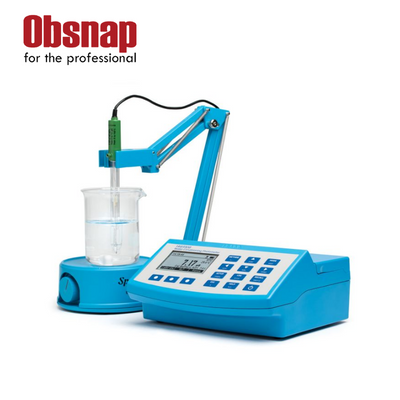
In addition to photometric analysis, the HI83308 features a digital pH electrode input with stored calibration data inside the probe, allowing electrode interchange without recalibration. Automatic temperature compensation ensures highly accurate pH readings. The instrument also includes an absorbance mode with CAL Check validation, enabling users to plot concentration versus absorbance using selectable wavelengths (420, 525, 575, 610 nm). With 1000 data logging capacity, GLP tracking, dual USB ports (USB-A and micro-USB-B), and rechargeable Li-polymer battery operation, this unit delivers professional-level performance in a compact benchtop design.
Features

  • Advanced 4-LED Optical System: 420 nm, 525 nm, 575 nm, and 610 nm narrow band interference filters with ±1 nm accuracy.
  • Reference Detector with Beam Splitter: Compensates for light drift caused by temperature or power fluctuation.
  • 23 Pre-Programmed Methods: Measures 15 key water quality parameters.
  • Digital pH Electrode Input: Stores calibration data in probe with automatic temperature compensation.
  • Absorbance Mode with CAL Check: Validate system performance and plot concentration vs absorbance.
  • Large 25 mm Cuvette Path Length: Improves accuracy especially in low absorbance samples.
  • Built-in Reaction Timer: Ensures consistent timing for photometric measurements.
  • Data Logging: Store up to 1000 readings with sample ID and user ID.
  • GLP Tracking: Records calibration date, time, buffers, offset and slope.
  • Dual USB Connectivity: USB-A for flash drive export and micro-USB-B for PC connection and power.
  • Rechargeable Battery: 3.7V Li-polymer battery supports >500 photometric tests or 50 hours pH measurement.
  • Backlit 128 x 64 LCD: Graphic display with virtual keys and on-screen help.

Specifications

SKU
HI83308-02
Product Name
Water Conditioning Photometer – HI83308
Quote Required
Yes
pH Range
Photometer
pH Resolution
Photometer
pH Accuracy
Photometer
pH Calibration
Automatic one or two point calibration with one set of standard buffers available (4.01, 6.86, 7.01, 9.18, 10.01)
pH Temperature Compensation
Automatic (-5.0 to 100.0 oC; 23.0 to 212.0 oF); limits reduced based on the pH electrode used
pH CAL Check (electrode diagnostics)
clean electrode and check buffer/check probe displayed during calibration
pH Method
Photometer
pH-mV Range
±1000 mV
pH-mV Resolution
0.1 mV
pH-mV Accuracy
±0.2 mV
Dissolved Oxygen Range
0.0 to 10.0 mg/L (as O2)
Dissolved Oxygen Resolution
0.1 mg/L
Dissolved Oxygen Accuracy
±0.4 mg/L ±3% of reading
Dissolved Oxygen Measurement Method
Adaptation of the Standard Methods for the Examination of Water and Wastewater, 18th edition, Azide modified Winkler method
Absorbance Range
0.000 to 4.000 Abs
Absorbance Resolution
0.001 Abs
Absorbance Accuracy
+/-0.003Abs @ 1.000 Abs
Ammonia Range
Low Range
Ammonia Resolution
0.01 mg/L; 0.1 mg/L
Ammonia Accuracy
Low Range
Ammonia Method
Adaptation of the ASTM Manual of Water and Environmental Technology, D1426-92, Nessler method
Free Chlorine Range
0.00 to 5.00 mg/L (as Cl2)
Free Chlorine Resolution
0.01 mg/L
Free Chlorine Accuracy
±0.03 mg/L ±3% of reading
Total Chlorine Range
0.00 to 5.00 mg/L (as Cl2)
Total Chlorine Resolution
0.01 mg/L
Total Chlorine Accuracy
±0.03 mg/L ±3% of reading
Chlorine Method
Adaptation of the EPA 330.5 DPD method
Copper Range
Low Range
Copper Resolution
0.001 mg/L; 0.01 mg/L
Copper Accuracy
Low Range
Copper Method
Adaptation of the EPA bicinchoninate method
Fluoride Range
0.00 to 2.00 mg/L (as F-)
Fluoride Resolution
0.01 mg/L
Fluoride Accuracy
±0.03 mg/L ±3% of reading
Fluoride Method
Adaptation of the Standard Methods for the Examination of Water and Wastewater, 18th edition, SPADNS method
Iron Range
Low Range
Iron Resolution
0.001 mg/L; 0.01 mg/L
Iron Accuracy
Low Range
Iron Method
Low Range
Manganese Range
Low Range
Manganese Resolution
1 μg/L; 0.1 mg/L
Manganese Accuracy
Low Range
Manganese Method
Low Range
Molybdenum Range
0.0 to 40.0 mg/L (as Mo6+)
Molybdenum Resolution
0.1 mg/L
Molybdenum Accuracy
±0.3 mg/L ±5% of reading
Molybdenum Method
Adaptation of the mercaptoacetic acid method
Nickel Range
Low Range
Nickel Resolution
0.001 mg/L; 0.01 g/L
Nickel Accuracy
Low range
Nickel Method
Low Range
Nitrate Range
0.0 to 30.0 mg/L (as NO3– N)
Nitrate Resolution
0.1 mg/L
Nitrate Accuracy
±0.5 mg/L ±10% of reading
Nitrate Method
Adaptation of the cadmium reduction method
Phosphate Range
Freshwater
Low Range
Phosphate Resolution
0.01 mg/L; 0.1 mg/L
Phosphate Accuracy
Low Range
Phosphate Method
Low Range
Silica Range
0.00 to 2.00 mg/L (as SiO2)
Silica Resolution
0.01 mg/L
Silica Accuracy
±0.03 mg/L ±3% of reading
Silica Method
Adaptation of the ASTM Manual of Water and Environmental Technology, D859, Heteropoly Molybdenum Blue method
Silver Range
0.000 to 1.000 mg/L (as Ag)
Silver Resolution
0.001 mg/L
Silver Accuracy
±0.020 mg/L ±5% of reading
Silver Method
Adaptation of the PAN method
Zinc Range
0.00 to 3.00 mg/L (as Zn)
Zinc Resolution
0.01 mg/L
Zinc Accuracy
±0.03 mg/L ±3% of reading
Zinc Method
Adaptation of the Standard Methods for the Examination of Water and Wastewater, 18th edition, Zincon method
Input Channels
1 pH electrode input and 4 photometer wavelengths
pH Electrode
digital pH electrode (not included)
Photometer/Colorimeter Light Source
4 LEDs with 420 nm, 525 nm, 575 nm, and 610 nm narrow band interference filters
Photometer/Colorimeter Light Detector
silicon photodetector
Bandpass Filter Bandwidth
8 nm
Bandpass Filter Wavelength Accuracy
±1 nm
Cuvette Type
round, 24.6 mm
Number of Methods
128 max.
GLP
calibration data for connected pH electrode
Logging Memory
1000 readings
Connectivity
USB-A host for flash drive; micro-USB-B for power and computer connectivity
Power Supply
5 VDC USB 2.0 power adapter with USB-A to micro-USB-B cable (included)
Battery Type/Life
3.7 VDC Li-polymer rechargeable battery / >500 photometric measurements or 50 hours of continuous pH measurement
Environment
0 to 50.0 oC (32 to 122.0 oF); 0 to 95% RH, non-condensing
Weight
1.0 kg (2.2 lbs.)
Dimensions
206 x 177 x 97 mm (8.1 x 7.0 x 3.8″)
Ordering Information
HI83308 is supplied with sample cuvettes and caps (4 ea.), cloth for wiping cuvettes, USB to micro USB cable connector, power adapter and instruction manual.

Ready to Transform Your Business? Contact Us Today

Categories

Request a Quote or Further Information

Please fill in the request form below and one of our engineers will contact you to discuss your system requirements and if we can help, our typical response time is within 1 – 3 working day.