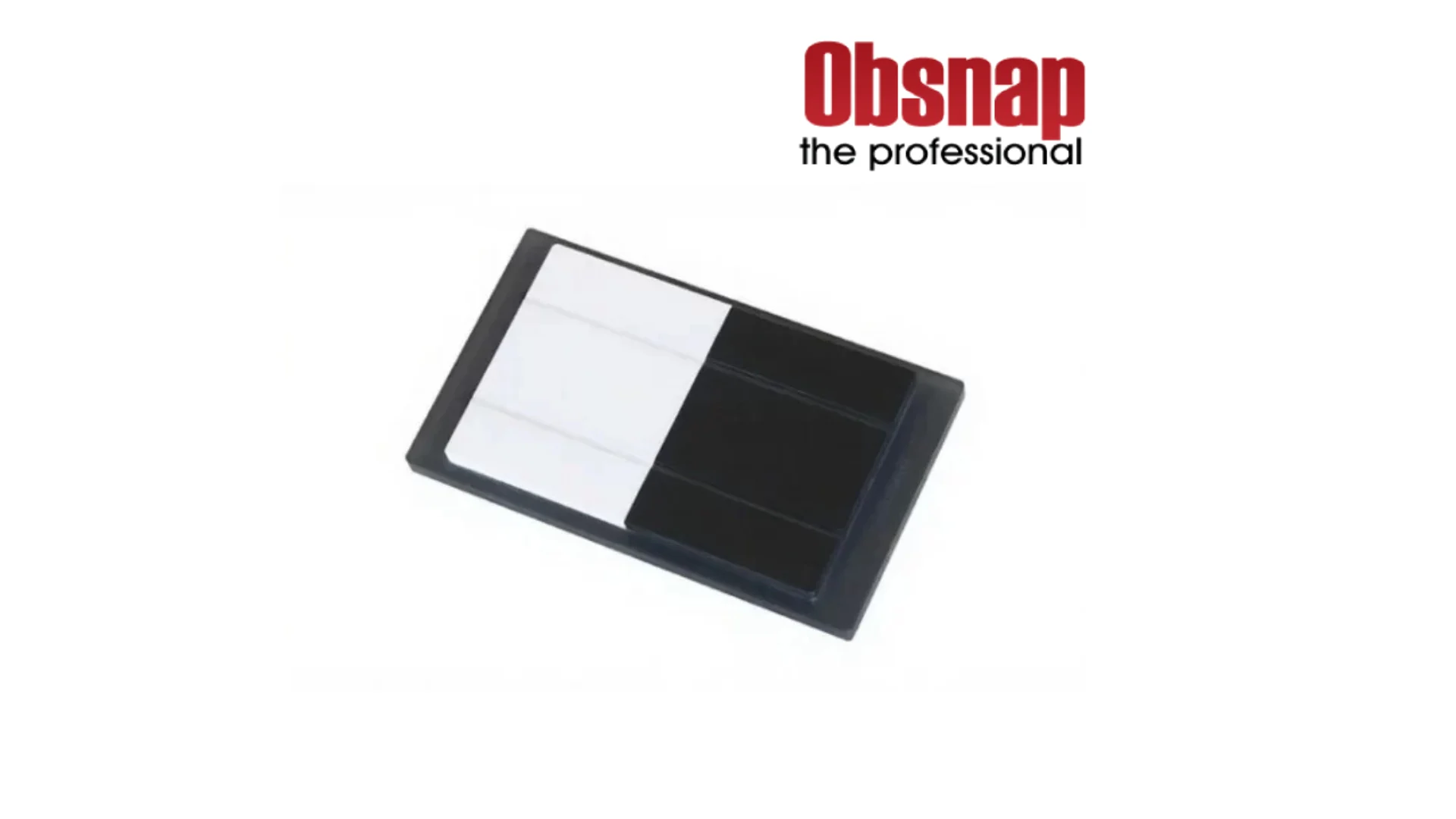
Description
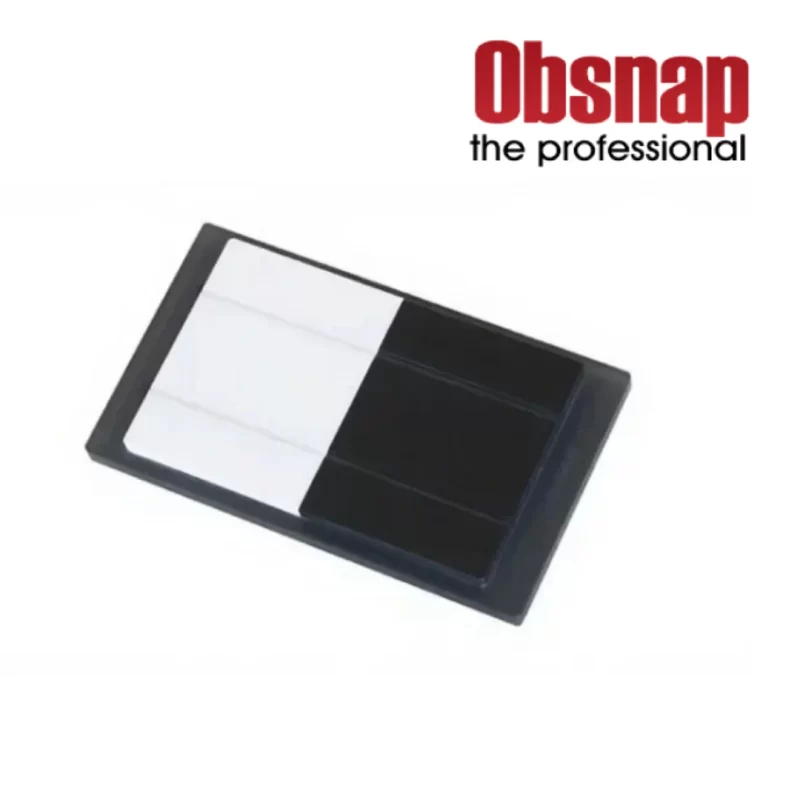
The appropriate top plate for the paint to be tested is selected, usually K=.008 for light coloured paints and K= .004 for dark coloured paints. (Alternatively, K= 0.002 for higher opacity coatings and K= 0.007 for less opaque coatings). A blob of paint, typically 3-5 ml is placed in the center of the base plate close to the black/white division. For light colours, the top plate (e.g. K= .008) is placed over the paint with the supports on the white area of the tile. The top plate is pressed down firmly so that the paint is spread without air bubbles to form a shallow wedge between the plates. This wedge will move with the top plate, the position of which is adjusted until the moment that the black/white division disappears. The scale reading is then noted from the black scale where the edge of the top plate makes contact with the base plate. When testing a dark coloured paint the top plate (e.g. K= .004) is used and the scale reading taken on the white area.
The thickness of paint in millimeters over the black and white division is obtained by multiplying the scale reading times the wedge constant K of the top plate used. This figure records the minimum film thickness necessary to obscure the black and white. The coverage or spreading power for this thickness can be obtained directly from the conversion tables below for each of the top plates.